
Every agency owner has been there. A client asks, almost as a throwaway line, whether you can also handle “some branded shirts for the team” or “a few hoodies to send to top customers this quarter.” You want to say yes, because saying yes is how retainers grow. But you also know what happens next: sourcing a supplier, ordering samples, negotiating minimums, storing boxes in a spare room, chasing shipping labels, and eating the loss on the wrong-size hoodies nobody wanted. The margin evaporates before the first t-shirt reaches a doorstep.
There is a cleaner way. Print-on-demand platforms let you offer a fully branded merchandise line to your clients without touching inventory, without upfront cost, and without adding a single logistical hair to your operation. Printify is the largest of these platforms, and it happens to be well-suited to the way agencies actually work — one-off runs, small batches, custom branding, and orders that need to ship to anywhere in the world without you touching a box.
This guide walks through exactly how to add branded merch to your agency’s service menu using Printify, from the product catalog decisions you’ll make in the first ten minutes to the pricing structure that turns merch into a genuinely profitable line item. If you already run an agency and you’re looking for a way to expand what you sell without expanding what you have to manage, this is one of the fastest additions you can make.
Why branded merch is a natural agency add-on
Merchandise is one of the few products that clients will happily pay a premium for and rarely price-shop. When a company orders three hundred branded water bottles for a conference, they are not comparing suppliers on a spreadsheet. They want it done, they want it done well, and they want someone they trust to make it happen. That “someone they trust” is already you, if you are their marketing, design, or web partner.
What has historically stopped agencies from offering merch is the operational drag. You need supplier relationships, a place to hold inventory, quality control on every batch, and shipping logistics that scale down to individual orders and up to bulk drops. All of that overhead traditionally requires either hiring a fulfillment coordinator or partnering with a full-service merchandise company that eats most of the margin.
Print-on-demand collapses all of that overhead. You upload a design, choose a product, set a price, and the platform prints and ships each item only when an order comes in. Nothing is manufactured until it is paid for. Nothing sits in your basement. Nothing arrives in the wrong size because you guessed the wrong quantity of larges. The margin that used to disappear into logistics stays in your pocket, or, more accurately, becomes the reason you can offer this service in the first place.
Printify, in particular, works well for agencies because of two structural choices the platform has made. First, it operates as a marketplace of print providers rather than a single factory. You get access to dozens of manufacturers in the United States, Europe, Asia, and Australia, which means you can print close to wherever your client’s audience actually lives — cutting shipping times to three or four days rather than three or four weeks. Second, its plan structure includes real branding features (custom neck labels, packaging inserts, and API access) that make the finished product feel like your client’s own line, not a Printify order with someone else’s tag hidden inside the collar.
The five-minute mental model: how Printify actually works

Before we get into the agency workflow, it helps to understand the shape of the platform. Printify is not a manufacturer. It is a marketplace layer that sits between you (the seller) and a network of print providers (the manufacturers). When you set up a product, you are effectively choosing three things: the base product, the print provider you want to fulfill it, and the design you’re putting on it.
Each product listing in Printify’s catalog shows you every print provider that can produce that item, along with their pricing, their production time, where they ship from, and their historical print quality score. This matters more than it sounds. Two providers offering the same t-shirt can differ by two dollars per unit and four days in shipping time, and the “cheaper” one is not always the better choice for a client who wants their conference merchandise to arrive before the conference.
The catalog itself covers most of what agencies get asked for: t-shirts and hoodies in every fit and weight, caps and beanies, mugs and bottles, tote bags, phone cases, notebooks, wall art, home textiles, and increasingly, functional items like backpacks and stainless-steel drinkware. There are more than 1,300 products in the catalog at the time of writing, which is more than enough range to say yes to almost any reasonable client request.
Once you’ve picked a product and provider, you use Printify’s mockup studio to place your client’s design, generate photorealistic previews for approval, and set your retail price. From that point on, you have two ways to actually fulfill orders — and this is where the agency angle gets interesting.
Two workflows: sell through a store, or fulfill privately
There are two distinct ways agencies use Printify with clients, and both are valid depending on what the client is trying to accomplish.
The first workflow is the merchandise store. Your client wants to sell branded goods to their own audience — employees, customers, community members, event attendees — and needs a public storefront. You set up a Shopify, Etsy, WooCommerce, Wix, or Squarespace store (Printify integrates with all of the major platforms and several smaller ones), connect Printify as the fulfillment engine, and every order that comes through the store is automatically routed to a Printify print provider who ships directly to the buyer. Your client gets the sales revenue. You bill either a setup fee, a monthly management retainer, or a revenue share. Neither of you touches a physical product.
The second workflow is private fulfillment. Your client does not want to run a store. They want three hundred hoodies for their conference, or a hundred welcome kits for new hires, or a small batch of gifts for their top fifty customers. In this case, you use Printify’s manual order creation feature to place the order directly, ship it to whatever addresses the client provides (individual employees, an event venue, a warehouse), and bill the client for the entire job. This is where agencies without any interest in running a public storefront can still add merch as a service line.
Most agencies end up doing both, depending on the client. A B2B SaaS company might want a swag store for their user community (workflow one) and a batch order of onboarding kits for new employees (workflow two). Printify handles both from the same dashboard.
Making it look like theirs, not yours: the branding features that matter
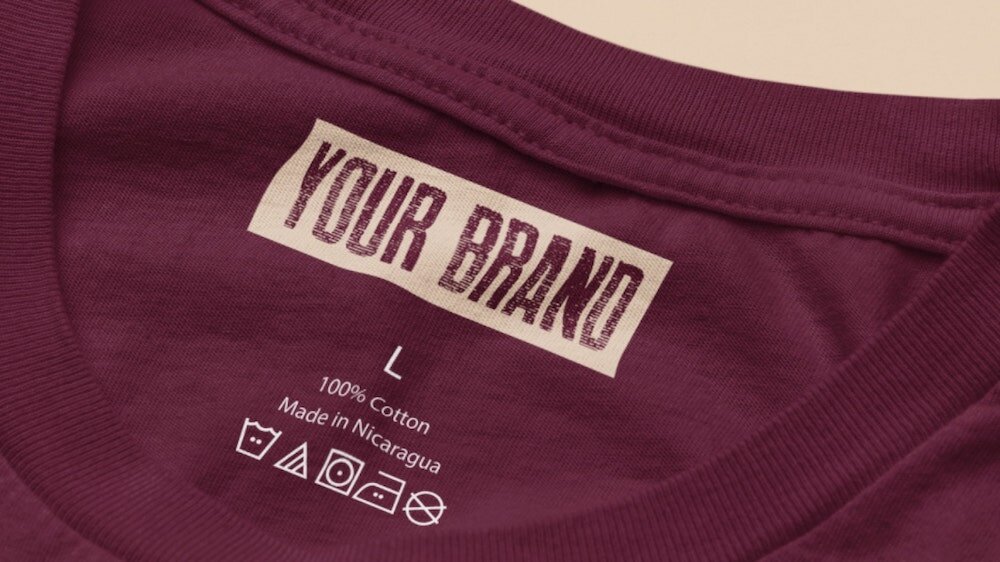
The single question that separates a real merchandise service from a hobbyist reselling t-shirts is: does the finished product look like it came from the client’s brand? Or does it look like a generic print-on-demand item with someone else’s tag inside the collar?
Printify’s Premium plan solves this at three touchpoints, and it’s worth understanding each one because they compound.
The first is custom neck labels. On supported apparel products, you can replace the print provider’s default neck tag with a printed label carrying your client’s logo, sizing, and care instructions. This is the detail that most cheaply-produced merchandise gets wrong and that a client’s most brand-conscious employee will notice immediately. Neck labels start at $0.44 per unit for Premium subscribers and are available across most of the popular menswear apparel range.
The second is packaging inserts. Every order that ships from a supported provider can include a printed insert card — a thank-you note, a discount code for a follow-up purchase, a QR code linking to a video message from the CEO, care instructions, or whatever the client wants that first unboxing moment to feel like. Inserts cost roughly $0.15 per order and are one of the highest-leverage brand touchpoints per dollar spent.
The third is the packaging itself. While Printify does not print custom outer boxes on demand, the combination of a branded neck label, a branded insert, and a folded item without a Printify tag anywhere on the outside is enough to make the entire unboxing experience feel like the client’s product line — not a print-on-demand fulfillment.
Together, these three touchpoints are what separate an agency offering real merchandise service from one drop-shipping generic hoodies with a printed logo. It is a small line item on your cost sheet and a large signal to your client.
What Printify costs an agency (and how to price the service)
Printify’s pricing structure is straightforward, which makes the agency math easy to work out on the back of an envelope.
The Free plan gives you access to the full catalog, up to five connected stores, and the ability to place orders manually. This is enough to test the platform and even run early client work. You pay the standard product price on every order and the plan itself costs nothing.
The Premium plan runs $24.99 per month on annual billing (or $39 per month if you pay monthly). It unlocks up to a 33% discount on product costs across the catalog, ten connected stores, custom branding features (the neck labels and inserts we just walked through), AI-generated mockups, and Printify Connect for order management. For any agency actively producing merch for clients, Premium pays for itself on the first medium-sized job — a batch of 150 t-shirts alone will save you more than a year of Premium fees on product discount alone.
The Enterprise plan is custom-priced and adds unlimited stores, deeper product discounts, a dedicated account manager, branded customer support, and custom API integration. Most agencies do not need this until they are running merchandise as a genuine business line rather than an add-on service.
The pricing model you use with clients will depend on the workflow. For private fulfillment (workflow two), the cleanest approach is a 40 to 60 percent markup on top of your Printify cost, plus a small management fee to cover your time coordinating the order. On a hoodie that costs you $18 after the Premium discount and $22 at the retail level, you’re looking at healthy margin without pricing yourself out of what clients expect for branded apparel.
For storefront management (workflow one), the market has settled around three pricing models: a one-time setup fee ($1,500 to $5,000 depending on complexity), a monthly retainer to manage the store ($500 to $2,000), or a percentage of gross revenue (typically 10 to 20 percent). Which model fits depends on how much of the store’s growth you are actively driving. If you are also running the marketing that drives sales, the revenue-share model tends to be the most lucrative over time.
Integrations: connecting Printify to the stack your client already uses

The integration list is one of the practical reasons Printify tends to win the platform comparison for agency use. If your client is already on Shopify, you connect Printify as an app, sync your products, and orders flow through automatically. Same story for WooCommerce, Wix, Squarespace, PrestaShop, BigCommerce, and Big Cartel. On the marketplace side, Printify connects to Etsy, eBay, and TikTok Shop.
The one caveat worth flagging: not every product in the catalog is eligible for every marketplace’s compliance requirements. If your client is selling through Etsy, for example, some product categories are restricted, and you’ll want to sanity-check the catalog before committing to a specific mockup. For most apparel and accessory categories, this is a non-issue.
For clients on custom platforms or headless commerce setups, Printify offers API access so a developer on your team (or a contractor) can integrate order flow directly. This is more setup work up front but useful for enterprise clients who don’t want their fulfillment tied to an app in someone else’s dashboard.
The Printify Pop-Up Store is a lightweight alternative for clients who don’t have a store at all and don’t want to build one. You spin up a hosted storefront on Printify’s own domain, share the link, and take orders — useful for one-off campaigns, event merchandise, or launches where standing up a full e-commerce site is overkill.
A realistic first job: a 90-minute walkthrough
To make this concrete, let’s walk through what setting up a first client project actually looks like. Assume your client is a B2B SaaS company running a user conference in eight weeks. They want 200 branded t-shirts and 50 hoodies to hand out to VIP attendees, and they want the entire thing to feel like their brand — no visible Printify tags, professional-looking hangtag replacements, and shipping to a single venue address before the event.
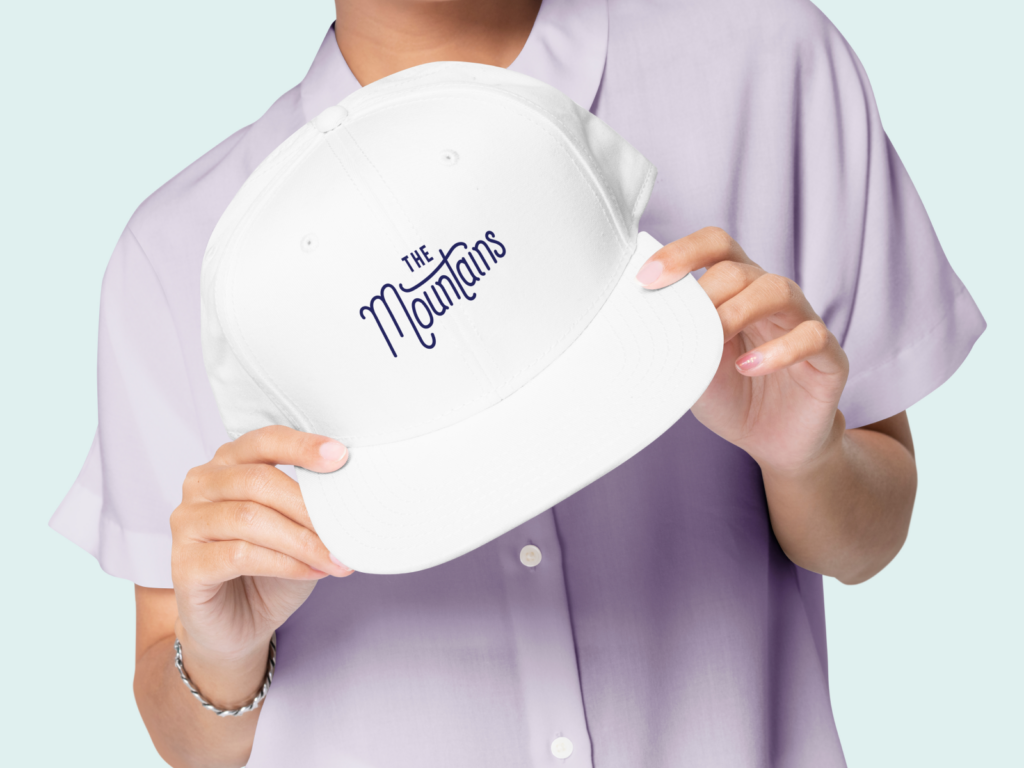
The first ten minutes go into product selection. You open the Printify catalog, filter to short-sleeve t-shirts and pullover hoodies, and sort by the print providers that produce closest to the conference venue — probably one U.S. provider if the event is stateside, one European provider if it’s in the E.U. You look for two things: a print quality score above 9, and estimated production time that gets the order to the venue at least seven days before the event date.
The next twenty minutes are the mockup. You upload the client’s approved logo files (usually a print-quality vector for the front, sometimes a smaller mark for the sleeve), use Printify’s mockup studio to place them, and generate photorealistic previews on the actual t-shirt and hoodie colors you’ve selected. You send those previews to the client for sign-off. This is the moment where clients tend to have opinions, so build in a round of revisions.
The next fifteen minutes go into branding setup. You upload the client’s neck label design (their logo, size, care instructions, “Made in [country]” as required), enable it on both products, and upload the packaging insert — usually a thank-you card with a QR code or short message from the client. Both of these get locked in at the product level, so every unit produced automatically carries them.
Then you place the order. Because this is workflow two (private fulfillment, no storefront), you use Printify’s manual order creation. You enter the venue’s shipping address, the quantity breakdown by size, and submit. The order is billed to your Printify account payment method — you’ll invoice the client separately at your markup.
The final step is tracking. Printify gives you production and shipping updates as the order progresses. You forward the shipping confirmation to your client with the expected delivery date. Total agency time invested from brief to shipped: about ninety minutes across the eight-week window, spread over two or three touchpoints.
Compare that to the traditional path — sourcing a supplier, coordinating samples, negotiating minimums, and coordinating shipping — and the operational math becomes obvious.
Where Printify fits (and where it doesn’t)
To be useful, this walkthrough has to include the honest limits of the platform. Printify is not the right choice for every merchandise job.
If your client needs a highly specialized product — a custom-cut athletic uniform, hardware with laser-etched components, or something that requires manufacturing tooling — Printify’s catalog won’t cover it. This is where you’d go back to a traditional custom merchandise supplier.
If your client is ordering thousands of identical units and unit economics matter more than lead time, a bulk-order supplier will beat Printify on per-unit cost. Print-on-demand’s advantage is zero minimums, not lowest unit price at scale. Somewhere around 500 to 1,000 units of the same design, traditional printing starts becoming more cost-effective if you’re willing to absorb the lead time and hold inventory.
If your client’s brand demands premium apparel blanks — heavier-weight cotton, specific brands like Comfort Colors or Champion, or high-end athletic wear — you’ll want to check which of Printify’s print providers stock the specific blank required. The catalog is broad but not infinite.
For everything else — the vast middle of what agencies actually get asked for, the small runs, the mixed-address shipping, the branded onboarding kits, the conference merch, the customer gifts, the community store — Printify is genuinely the fastest way to add a real merchandise capability to an agency without adding real overhead.
Getting started this week
If you want to test this on your own agency, the practical first move is simple. Create a free Printify account, spend twenty minutes clicking through the catalog to understand what’s available, and set up one product with a mockup — even a placeholder design on a t-shirt — just to walk through the workflow end-to-end. That single exercise will tell you more about whether this fits your agency than any amount of reading.
Once you’ve done that, the next move is to identify one existing client where a small merchandise conversation makes sense. Not a pitch. A conversation. “We’ve been looking at print-on-demand and could handle branded merch for the team going forward if that’s ever useful.” Half the time the answer is a polite no. The other half is “actually, we’ve been meaning to do exactly that.”
Those “actually” moments are where a service line quietly gets added to your agency.
Bizoo helps B2B service businesses expand into new revenue streams without expanding operational overhead. If you’re building out a merchandise offering for your clients and want a second set of eyes on the workflow, get in touch.